 November 28, 2026
Difference between SFA and CRM, SFA and field sales software?
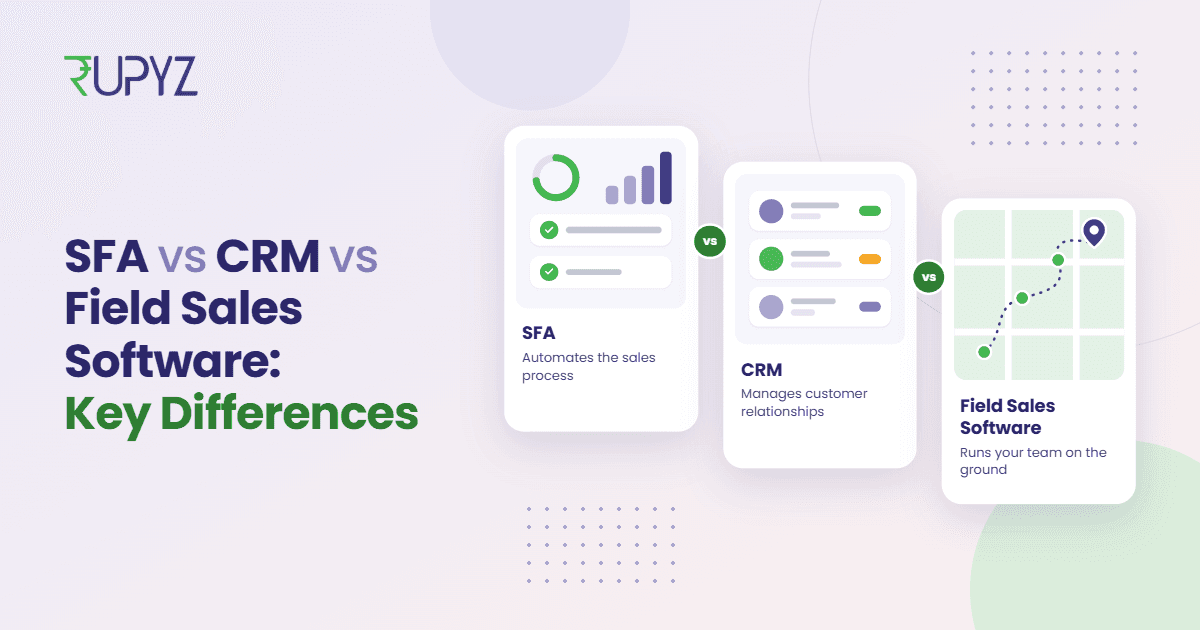
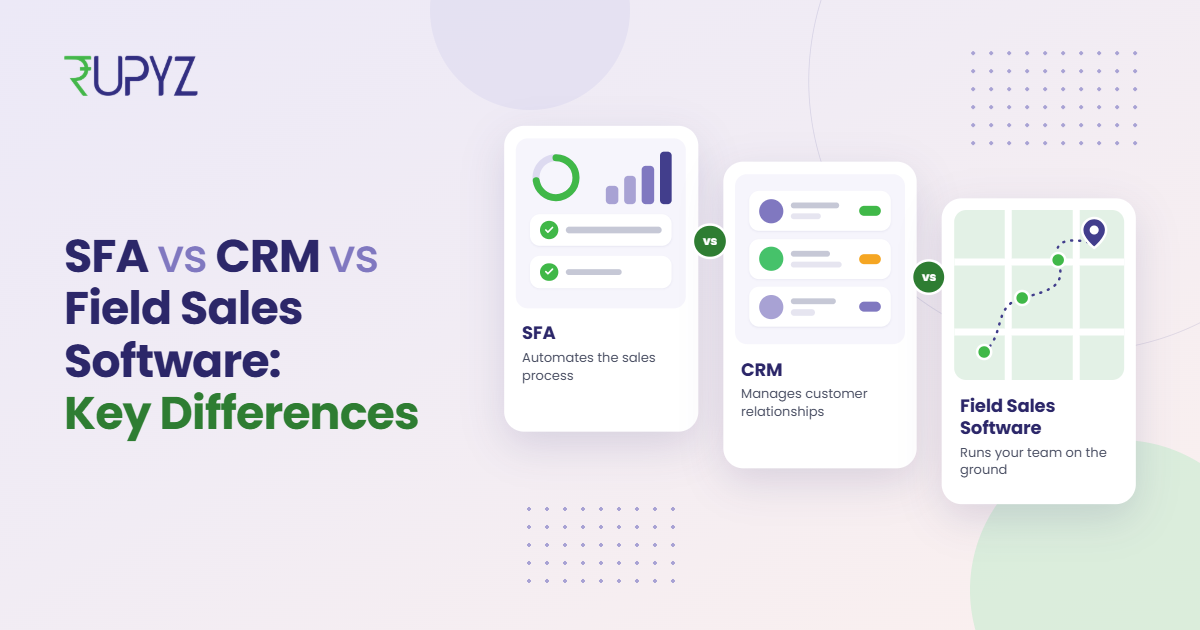
SFA, CRM, Field Sales Software, CRM (Customer Relationship Management) is the umbrella. SFA (Sales Force Automation) is a focused sub-set of it, built for one very specific situation: a distribution-led business with a large on-ground sales team that visits hundreds of thousands of retail outlets through distributors.
A CRM is designed around a lead, a deal and a pipeline. It is great for B2B software companies, real estate, insurance or any business where a few salespeople nurture a few hundred accounts over weeks. An SFA is designed around a beat, an outlet, an order and a distributor. It is for businesses where 50 to 5,000 reps make 30–50 physical visits a day, book secondary orders, mark no-order reasons, click shelf photos and claim TA-DA.
Practical differences a buyer should know about SFA, CRM, Field Sales Software:
Unit of work — CRM: a lead or opportunity. SFA: an outlet visit on a beat.
Channel — CRM: direct sales. SFA: brand → distributor → retailer, with secondary sales as the core.
Field reality — SFA must work offline, in regional languages, with geo-fencing, fake-GPS blocking and route-based expense calculation. A CRM does not need any of this.
Outputs — CRM: pipeline and forecast. SFA: DSR, load sheet, coverage, productive calls, lines per call, target vs achievement, scheme execution.
Connected systems — SFA connects to the DMS, distributor's Tally and WhatsApp. CRM connects to email and marketing automation.
A simple test: if your sales team is measured on calls, productive calls and secondary sales, you need an SFA. If it is measured on pipeline and deal closure, you need a CRM. Many FMCG brands have tried running field sales on a general CRM and moved to an SFA within a year because the field team simply did not use it.
In practice there is no real difference — they are two names for the same category, and buyers in India use many more: sales force automation, field force management, field sales management software, secondary sales management, salesman tracking app, beat planning software, PJP software, order booking app. All of them describe a mobile app plus a web console that runs a field sales team.
If a distinction is made, it is this: "field sales software" is the broad, generic term (it can mean a simple attendance and location app used by any industry — pharma MRs, service engineers, delivery teams). "SFA" in the Indian FMCG context means the full stack for distribution-led brands: beat planning, outlet universe, secondary order booking, no-order reasons, schemes, surveys and merchandising, DSR and load-sheet automation, TA-DA, target and incentive, and integration with DMS, Tally and WhatsApp.
So when evaluating, do not go by the label. Check whether the product handles the FMCG specifics — secondary sales, distributor integration, fake-GPS blocking, offline use, regional languages and customizable activities. A "field sales app" that only tracks location and attendance is not an SFA, and a brand that buys it will be looking for a replacement within 18 months.
Looking to automate field sales, manage distributors, and improve sales team productivity?
Discover how Rupyz SFA software can help your FMCG business grow.